


Weather Trauma: A Psychologist’s Perspective
As you read this, somebody somewhere is trying to recover and rebuild after experiencing a devastating, and perhaps deadly, natural disaster. Some people are doing better than others.
Hurricanes, tornadoes, floods, wildfires, and earthquakes destroy homes and businesses and disrupt the normal way of life for entire communities. Additionally, they can cause damage on a more personal level. Dealing with unexpected and uncontrollable weather events can be traumatic for people directly and indirectly affected by the weather.
“Some people process stress very well,” says Beverly Dolenz Walsh, PhD, a licensed psychologist who specializes in trauma therapy. “These people can stay in their whole, integrated brain. But some people stink at that, and this is when we need to introduce information in a multi-level, multi-formatted way.”
Walsh speaks from both professional and personal experience. Her home in Houston flooded during Hurricane Harvey in 2017. She and her husband had the resources to reduce stress while they rebuilt. But she acknowledges it might take a long time, maybe years, for some people to recover fully.
Keep It Simple and Specific
“We all lose IQ points when we get stressed and anxious,” Walsh stresses. “The moment stress gets introduced, we start becoming more concrete in our thinking, and the nuance that you want people to be able to pick out on their own is not going to be available to them.”
Providing clear, concise information helps people manage their response to a natural disaster and navigate the situation more effectively. Broadcast meteorologists should be as specific as possible when producing weather content. Don’t generalize. Talk about explicit threats, impacts, timing, and amounts whenever possible. And if you can’t be specific, mention that, too.
After Hurricane Harvey hit Houston in 2017, every time the weather team at KTRK and I predicted heavy rain, we stressed, “This will not be another Hurricane Harvey.” Every. Time. We learned that even if people didn’t flood during Hurricane Harvey, they worried they might flood in the next storm.
We also realized the word “flood” is too generic. Several years later, Travis Herzog, the current Chief Meteorologist at KTRK, says the team still breaks down the risk of street flooding, bayou flooding, and river flooding.
Shorter is better
Walsh advises delivering information in shorter segments to avoid “overdosing” the viewer. Rather than one long weather update, presenting a series of shorter segments would give viewers time to digest and comprehend the information.
Broadcast meteorologists could also deliberately produce their longer weather hits so the information is delivered in chunks, perhaps focusing first on the overall situation and then slowly and methodically breaking down the threats and impacts based on geography or timing.
Full-screen graphics vs. Maps
Presenting weather content in different formats helps some viewers understand the situation. While most weather presentations feature an array of maps, full-screen text graphics can benefit viewers who need to have essential details spelled out for them, literally.
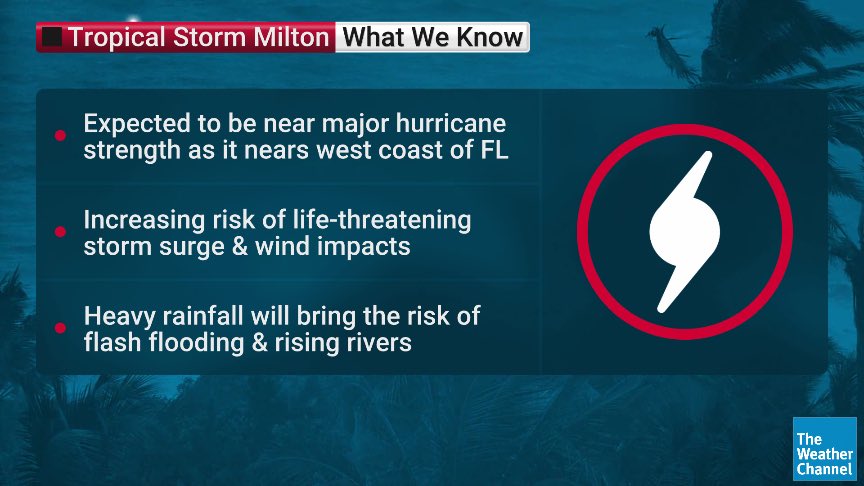
“We all integrate information differently. Some people are very visual, and maps really make sense to them,” Walsh explains. “For other people, those maps are gobbledygook, and they need to see words. Other people need to hear the information.”
Timely updates are essential
A recent study conducted by HellerWeather shows that while many local television stations regularly update the weather content aired on their broadcast channels, updates on the station’s digital platforms are often outdated.
READ MORE > DIGITAL WEATHER COVERAGE: CHALLENGES AND OPPORTUNITIES
More than 70% of the stations randomly selected for the study clipped a weathercast from a newscast that aired several hours or sometimes days before. This practice isn’t ideal during quiet weather. It’s unacceptable during breaking weather when conditions change by the hour.
“As humans, we are wired for story,” Walsh reminds us. “We know this, and if things happen in a vacuum, we start to create the story. And then the story ends up getting legs. That’s when it’s important to have that timely, accurate information. Otherwise, people start making stuff up as we try to make sense of what’s going on around us.”
In addition to producing live news broadcasts, local television stations must update their digital weather coverage strategy to serve viewers who watch weather updates on demand on the station’s website or mobile app.
Aftercare after the storm
Walsh urges caution about showing file video in the aftermath of a major weather event. “If you show video from five days ago in the news broadcast, for example, people have the perception that’s still the current situation. People don’t see that there’s progress and a shift to recovery.”
Videos of a hurricane making landfall, flood waters flowing through a community, tornadoes tearing apart homes, and wildfires burning uncontrollably are better offered on digital platforms where people can choose whether or not to watch them.
She adds that some people process trauma through action. “Offering a link of how to help is, well, helpful. It’s also a reminder to those directly affected of what real ‘help’ will look like to avoid potential scammers.”
Be the calm in the storm every day
There will be more major hurricanes, extreme tornadoes, and uncontrolled wildfires. According to the Intergovernmental Panel on Climate Change, the warming planet “has increased the frequency and intensity of extreme weather events.” This, apparently, is the new normal and highlights the critical need for effective communication strategies.
As a result, local television stations must establish themselves as trusted sources of weather information. And the best time to do that is before natural disasters occur.
Walsh’s suggestions should serve as a guidepost for every weathercast, every day. Providing viewers with clear, concise information using a mixture of maps and full-screen graphics consistently updated on broadcast and digital platforms is always an effective weather communication strategy.
Tim Heller is an AMS Certified Broadcast Meteorologist and Weather Communications Coach. He helps local TV stations and broadcast meteorologists communicate more effectively and work more efficiently.