


New Study Exposes Gap in TV Station Online Weather Coverage Strategy

Key Finding: Only about 10% of local television stations in the U.S. produce relevant online weather content. In most cases, the “latest” weather update is clipped from a newscast that aired on TV several hours before and sometimes several days ago.
According to a national study published in 2024 by Pew Research, nearly half (48%) of U.S. adults prefer to access local news online, compared to 32% who favor television. Additionally, of those looking online for local news, a resounding 90% said they usually check the weather.
Considering this research, you might expect local television stations and other news organizations to have an aggressive weather coverage strategy to keep the online content updated with relevant information. But that’s not always the case.
In early 2025, HellerWeather undertook a comprehensive study to examine how effectively local television stations are meeting the demand for online weather updates. The results were surprising and discouraging.
Over 70% (72-74%) of television stations in the study clipped a weather update from a newscast broadcast that aired live on TV several hours earlier. These clipped weathercasts always included outdated content and were not always from the last newscast that aired on TV. This study found many videos dated 6-12 hours during the week, and a significant number of them were more than 24 hours old on the weekend.
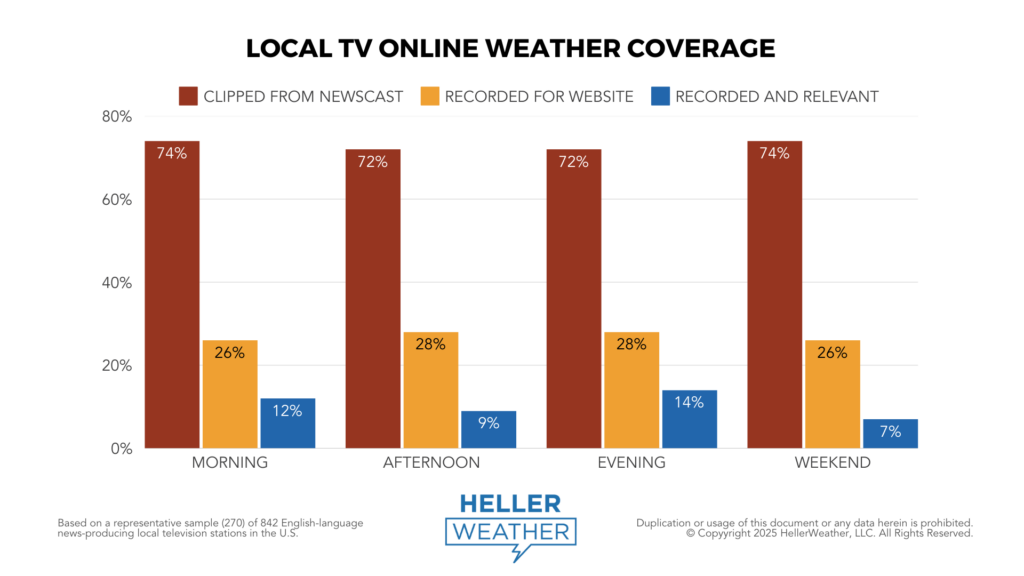
Only about 27% of local television stations recorded special webcasts for the website, but many of the broadcast meteorologists included outdated content, such as “current” conditions, “live” sweeping radar, and forecasts for dayparts that had already passed.
Only a small percentage (7-14%) of all the webcasts viewed were recorded for the website and contained relevant content that was not outdated.
Research Methodology
Among the 842 English-language, news-producing local television stations across the U.S., a representative sample of 270 stations was randomly generated. The list of television stations was not weighted based on corporate ownership. However, care was taken to ensure this study included television stations owned by every major media company, including those owned by ABC Disney, Allen Media, CBS Paramount, Cox Media, Fox Television, Graham Media Group, Gray Media, Hearst, Hubbard Broadcasting, Morgan Murphy Media, NBC Universal, Nexstar, Scripps, Sinclair Broadcast Group, and Tegna. The random sample also included about two dozen television stations owned by smaller media companies.
READ MORE > 4 THINGS I NOTICED ABOUT WEATHER COVERAGE ON TV STATION WEBSITES
The weather page on every station’s website includes a radar display, current weather conditions, an hour-by-hour forecast for the next several hours, and a 7- to 10-day extended forecast. The one unique element is the weather video produced by the station’s broadcast meteorologists, usually accompanied by supplemental text that includes additional information and discussion. For this study, only the content of online webcasts was reviewed.
Weather videos on each station’s website were sampled four times over four weeks: mid-morning, mid-afternoon, early evening, and weekend afternoons. During these times, viewers are likely seeking updated weather information between newscasts.
Each video was first watched to determine whether it was clipped from a live news broadcast previously aired on the television station or recorded specifically for the website. The content was also reviewed to determine whether or not it was timely and relevant. Finally, the length of the video was noted, along with the day and time it was viewed.
Full results
Whether consumers will find a weather webcast that is at least somewhat timely depends on the time of day it is viewed and the day of the week.
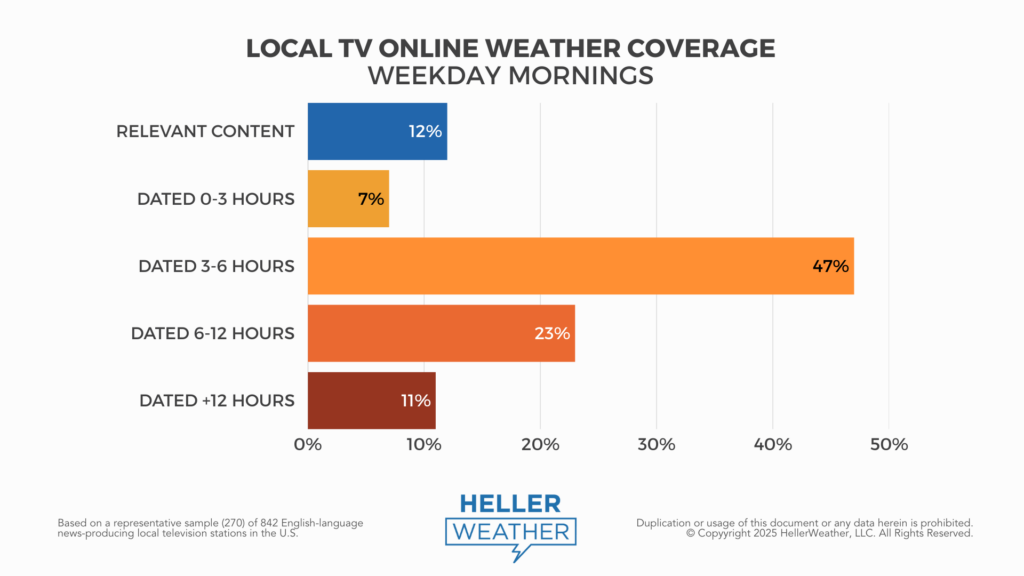
If consumers check a TV station’s website mid-morning on a weekday, they are likelier to find a weather webcast that aired on television 3-6 hours before. 23% were clipped the night before, and 11% were from a newscast that aired the day before. Only 12% of the webcasts were recorded for the website and contained relevant, not outdated, information.
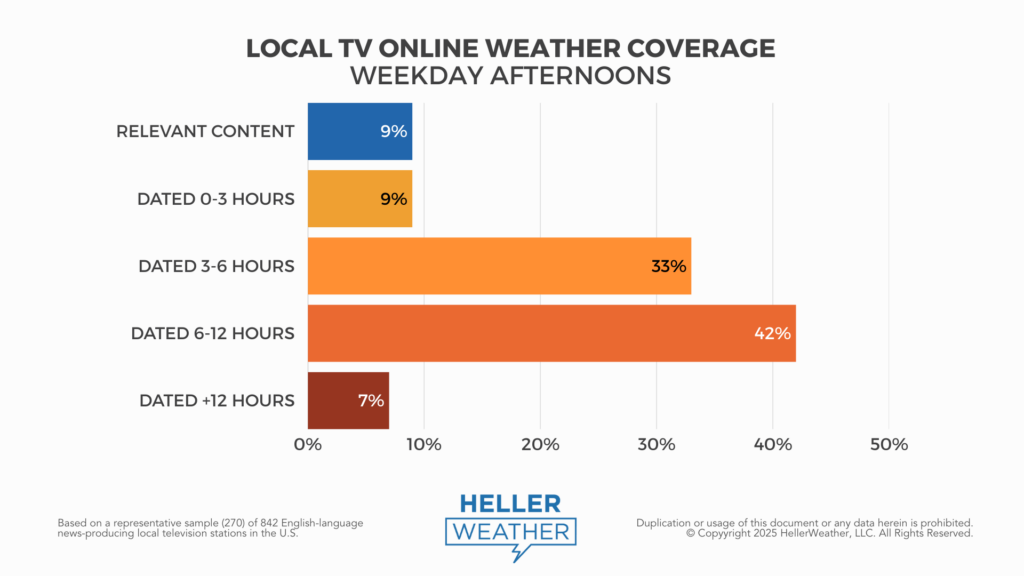
By mid-afternoon, most of the webcasts watched for this study had not been updated and contained information that was now 6-12 hours old. Only 9% of the webcasts were recorded specifically for the webcast and included relevant weather content.
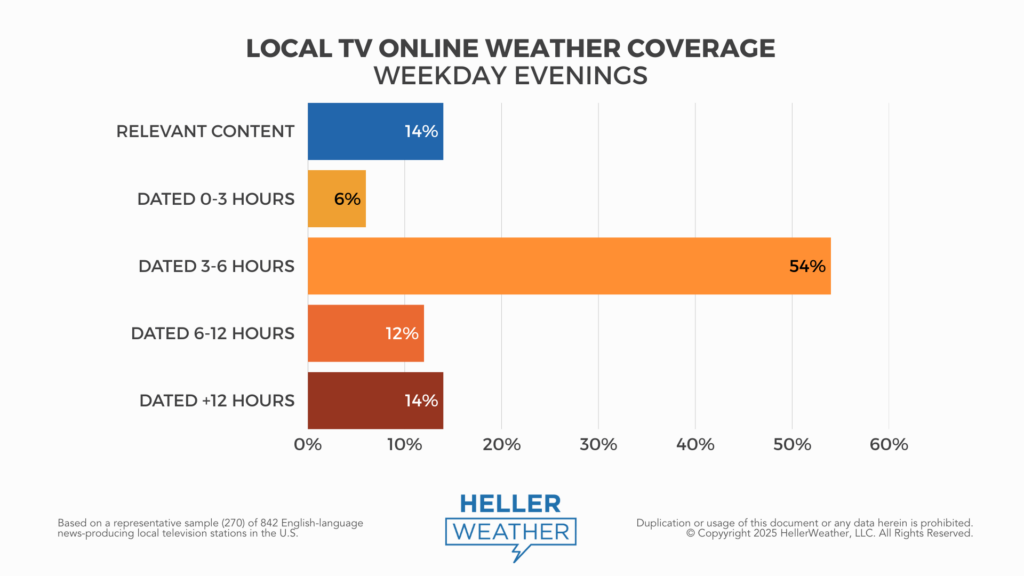
About half (54%) of television stations seem to clip weather hits from a late afternoon or early evening newscast. As a result, when viewed mid-evening, the content is usually dated 3-6 hours. 14% of webcasts were clipped from an early morning newscast and dated more than 12 hours.
This is also the time period when consumers are more likely to find a webcast that has been recorded for the website and contains relevant information. Still, only 14% of television stations in the study made an effort to do that.
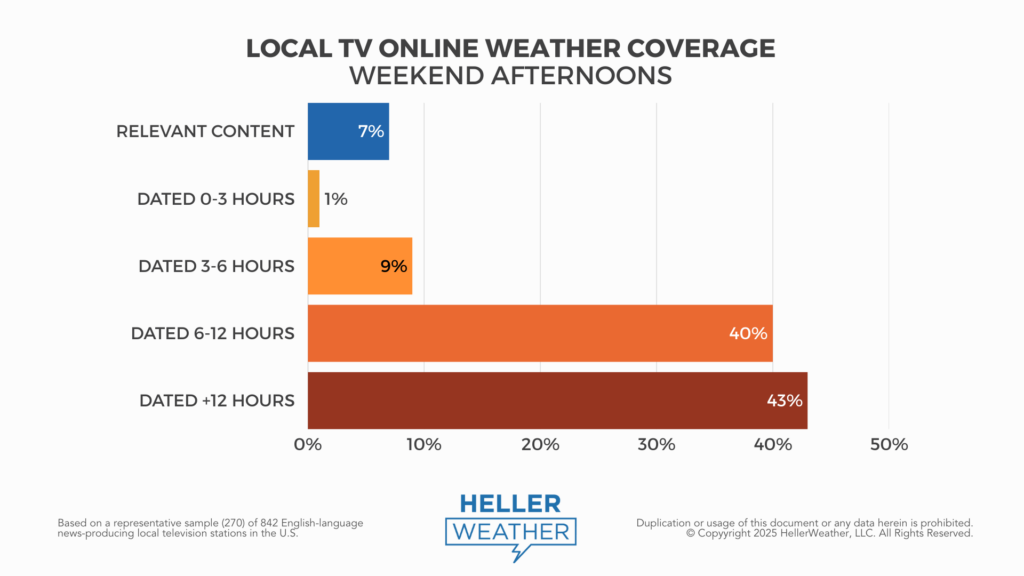
The weather content on weekends was the most outdated. Only 7% of the English-language news-producing local television stations included in this study publish relevant weather content on Saturday and Sunday. Over 40% of webcasts viewed had not been updated since the previous evening, with many clipped weathercasts 18 to 24 hours old.
Other findings
The shortest webcast viewed was 24 seconds long. The longest recorded video was about 15 minutes long and focused on a disruptive weather event in the local area. Of the roughly 10% of webcasts that featured relevant content, 38% were under two minutes long, whereas nearly half (45%) exceeded four minutes.
READ MORE: THINK DIGITAL NOW NOT DIGITAL FIRST FOR ONLINE WEATHER COVERAGE
It did not seem to matter whether the different locations included in this study were experiencing severe or disruptive weather when the websites were reviewed. During this four-week study and a preliminary study conducted in the fall of 2024, local weather teams tracked hurricanes, winter storms, and wildfires. Surprisingly, even then, most of the weather webcasts on local television station websites were several hours or several days old.
Furthermore, even fewer television stations consistently provide relevant webcasts on their websites. When consumers check a specific TV station’s website throughout the day, they might find a recorded relevant webcast one time and an outdated clipped weathercast at another.
Summary and Conclusion
Research indicates consumers prefer following local news online, and the topic they are most interested in is the weather. However, this study exposes a significant lack of updated and relevant weather content on the websites of local television stations. While the weather data displayed on the website is regularly refreshed, the webcasts are not.
Although this study only considered the webcasts published on each television station’s website, the same videos are usually uploaded to other digital platforms. Based on this study, consumers can expect to find outdated weather content on the station-branded weather app, too.
The broadcast meteorologists working at the television stations are not necessarily to blame for the lack of timely, relevant weather content. While the weather department might be responsible for the forecast, local or corporate news managers often determine the online weather coverage strategy. Clipping old newscasts might simply be how some television stations choose to cover local weather online. Furthermore, staffing limitations and technical glitches can impact whether a recorded update is published in a timely manner.
Despite these challenges, television stations that develop a weather coverage strategy prioritizing relevant online content have a unique opportunity to build a loyal audience, mainly because so few stations are doing it. On the other hand, news organizations that fail to do this risk frustrating consumers, which may lead to new habits, namely not trusting local television stations to provide timely, relevant online weather content when people need it.
HellerWeather provides guidance and support to broadcast meteorologists and local TV stations committed to developing effective online weather coverage strategies. For more information: Talk to Tim.
Tim Heller is an AMS Certified Broadcast Meteorologist and Weather Communications Coach. He helps local TV stations and broadcast meteorologists communicate more effectively and work more efficiently.