


Overcoming the Distrust and Distaste of AI

Let’s be honest: when management rolls out new software and declares it will “revolutionize the way we work,” there’s usually a collective eye-roll from the people working on the front lines.
If your company recently handed you a login to a new Artificial Intelligence tool and you haven’t touched it since the training webinar, you aren’t alone. According to Worklytics, 95% of corporate AI projects stall within three weeks of implementation.
You might have very good reasons for ignoring the AI tab on your browser. While your reluctance is entirely valid, it might keep you from making your workday significantly easier. Let’s look at why you don’t like AI, why that mindset might need a slight adjustment, and how you can take control of this technology on your own terms.
Why You Hate AI (And Why You’re Not Wrong)
Employee resistance to AI isn’t usually about a lack of technical skills. It’s a deeply human, emotional response to a disruptive shift. If you are avoiding AI, it likely boils down to one of these three very valid reasons:
The Fear of Replacement: This is the elephant in the room. A recent study found that 75% of employees worry AI could eliminate jobs. It is entirely logical to think, “If I teach this machine how to do 40% of my job, will management decide they only need 60% of me?”
The Trust Issue: You take pride in your work. Handing over tasks to a program that potentially hallucinates facts or produces generic, robotic outputs feels risky. If your name is on the final product, you need to trust the process. And right now, AI feels like something you can’t control.
Workflow Disruption: Learning a new tool takes time you don’t have. When you are already overwhelmed, slowing down to figure out how to prompt a chatbot feels like a step backward, not forward.
Why Your Fears Need an Update
Your concerns are entirely justified. However, they might be based on a misunderstanding of what AI could accomplish in the modern workplace. Think of AI not as a human replacement, but as a workflow assistant.

AI is really good at processing data, summarizing information, generating first drafts, and taking care of tedious, repetitive tasks that eat up your valuable time. But it cannot replicate the emotional intelligence, contextual reasoning, or relationship-building. That’s your job.
Organizations that successfully integrate AI tools can see a remarkable shift toward higher employee engagement. Why? Because when workers are no longer bogged down in busywork, they finally have the mental bandwidth to innovate, solve complex problems, and cultivate deeper connections.
READ MORE: AN AI TOOL DESIGNED FOR BROADCAST METEOROLOGISTS
Embracing AI allows you to transition from merely executing tasks to directing outcomes. It doesn’t just speed up the mundane; it reveals new opportunities for professional growth, giving you the time, energy, and resources to become the visionary thinker and creative problem-solver that no machine can ever replicate.
Why AI Feels Broken Right Now
This isn’t the first time technology has disrupted the workplace. And it won’t be the last. In the late 19th century, factory owners excitedly replaced their massive steam engines with giant motors powered by this new technology called electricity. Yet, productivity barely improved for over twenty years! Why? Because management simply swapped the power source without changing how the work was actually done. They kept the old, inefficient belt-and-pulley systems and the cramped multi-story layouts dictated by steam power.
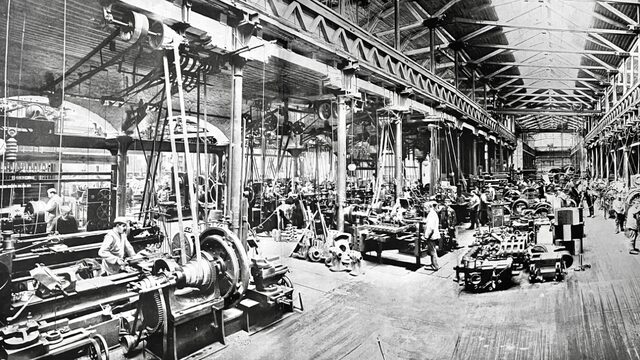
The real electric revolution happened decades later when a new generation of managers realized they could attach small, individual electric motors to each machine. This allowed them to redesign the entire factory which eventually gave way to the modern assembly line.
The lesson is clear: simply having access to a revolutionary technology won’t transform your output until you adjust your daily workflow to harness it.
4 Steps to Take Back Control
You don’t need to become an AI enthusiast overnight. There’s a lot to learn, and the different platforms are being updated with new features all the time. Still, there are a few low-risk ways to start using AI in the workplace:
1. Audit Your Workflow
Spend one week tracking your daily tasks and writing down everything you do in a typical day. Then identify just one tedious, repetitive task that drains your energy.
Do you spend a couple of hours a day answering emails?
Are you constantly sifting through piles of data?
Do you stare at a blank screen for 20 minutes trying to write an engaging article?
Research ways AI can help you accomplish one of these tasks. Then commit to using AI only for that specific pain point. Once you feel comfortable delegating that task to AI, select another, and repeat the process.
2. Practice Prompting
For people working in a fast-paced environment, such as a television newsroom, the most crucial skill to acquire is “prompt engineering.” Since you don’t have time to struggle with a chatbot, you must clearly define the task and expected outcome for the AI.
Consider the repetitive task of converting a broadcast script into a web article and social media post:
Instead of: “Rewrite this broadcast script into a web article.”
Try this prompt: “Act as a digital news producer. Convert this broadcast script into a 300-word SEO-friendly web article. Strip out all broadcast cues (like [VO] and [SOT]). Write a factual, non-clickbait headline and format the article in short paragraphs. Finally, draft one engaging Facebook post to drive traffic back to the website.”
By giving highly specific instructions, you maintain editorial control. You are simply using the technology to automate the formatting, giving you time back to chase the actual story.
3. Think of AI as an Intern
Treat AI like an eager, highly educated new intern. It can process information at lightning speed and handle the heavy lifting of your initial drafts, but it doesn’t understand your company’s culture, your viewers, or your unwritten rules.
Just as you wouldn’t publish, post, or broadcast a brand-new intern’s work without looking at it, you need to manage the AI. Your role is to act as the supervisor: provide crystal-clear instructions, set the guardrails, and let it do the tedious groundwork. (And no, unfortunately, it still can’t fetch your morning coffee.)
4. Always Keep a Human in the Loop
Because your AI “intern” lacks that real-world experience, you must adopt a strict Human-in-the-Loop (HITL) mindset. This is perhaps the single most important rule when working with generative tools: AI is not perfect, and its output should never be the final product. It can misinterpret context, lack emotional intelligence, or even confidently state incorrect facts.
By keeping a human firmly in the loop to review, verify, and refine the AI’s output, you take back control and ensure the final product is accurate and uniquely yours.
The Bottom Line: Don’t Let Headlines Dictate Your Potential
It is easy to let scary headlines about massive tech layoffs convince you that AI is coming for your paycheck. But those headlines rarely reflect the reality on the ground. Much of the recent turbulence in the tech sector has been driven by post-pandemic economic corrections. In fact, many companies are restructuring their budgets to invest in AI development, not because an AI tool suddenly learned how to do the jobs of 10,000 employees overnight.
When talking about AI in the workplace, you will often hear this phrase: AI isn’t going to take your job, but someone who knows how to use AI might. For the vast majority of organizations, heavy investments in artificial intelligence are not about reducing headcount; they are about increasing human productivity and driving revenue. Your company doesn’t want to replace you; they want to augment you.
Having a general distrust and distaste for new technology is a natural first reaction. But allowing that reluctance to keep you shackled to tedious, manual work is a disservice to your own potential. Step out of the resistance. Find just one small, tedious task to hand over to the machine today, and give yourself the time to do the work that actually matters.
Tim Heller is an AMS Certified Broadcast Meteorologist, Talent Coach, and Weather Content Consultant. He helps local TV stations and broadcast meteorologists communicate more effectively and work more efficiently.