


4 Lessons Broadcast Meteorologists Must Unlearn
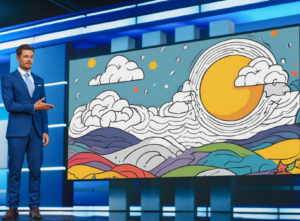
The research is clear: most local news viewers already know the general forecast.
Of course, they do. These days, people don’t have to try to find the forecast. Weather information is everywhere! It’s right there waiting for you on your smartphone before you take it off the charger in the morning. It’s there on your smartwatch and computer desktop. Some refrigerators, bathroom scales, and cars display the forecast and weather maps. It’s practically impossible not to know the forecast.
So, how do broadcast meteorologists remain relevant in a world where they’re not needed every day? As someone who coaches broadcast meteorologists and local television station weather teams, I often think about that.
READ MORE: WEATHER APPS ARE GETTING SMARTER AND MORE USEFUL
It’s natural to think that this is a problem. It is. If it’s not obvious, let me state this fact again: viewers don’t need local TV meteorologists to tell them what the weather will be like today.
Rather than think of this situation as a problem, I prefer to think of this as an opportunity. Broadcast meteorologists have an opportunity to redefine their job, what they do, and how they do it. This is an opportunity to evaluate the daily workflow and adjust the workload to align with the expectations of contemporary consumers, particularly on digital platforms.
For guidance, I offer the words of wisdom of one of our contemporary philosophers: “You must unlearn what you have learned.”

To remain relevant, broadcast meteorologists must challenge fundamental assumptions about their job and the traditional methods of communicating weather information. This is a call to innovate, to upset the status quo and learn contemporary ways of connecting with consumers. Be willing to consider new strategies that might contradict everything you think you know about broadcast meteorology.
However, to embrace these changes, broadcast meteorologists must be willing to unlearn some old lessons. This is a crucial step in making room for new strategies and approaches that align with the demands of the digital age.
Here are three lessons I had to unlearn during my career as an on-air broadcast meteorologist. The first lesson is that you’re not who you think you are.
You are not a Broadcast Meteorologist. You are a Multimedia Meteorologist.
The weather teams working at television stations today produce content for multiple platforms, broadcast and digital. I might be only a little biased when I declare that broadcast meteorologists are some of the hardest-working people in the newsroom. In addition to live newscasts, the weather team creates content for station-branded websites, mobile apps, streaming platforms, and social media. Some record podcasts, write newsletters and produce updates on local radio stations. Most broadcast meteorologists I know start their workday hours before coming to work. They’re constantly checking the weather.
But calling yourself a broadcast meteorologist reinforces the false narrative that producing weather hits for the live newscast on TV is the most important thing you do. It was twenty years ago. It’s not today.
READ MORE: LOOKING FOR NEWS VIEWERS? HERE’S WHERE YOU’LL FIND THEM
Weather coverage on the station-branded website and mobile apps is as important as live news broadcasts. For many consumers, it might be the only way they follow local news, while some never or rarely watch live news broadcasts.
According to a study conducted by Pew Research, almost half of the people surveyed said they prefer getting local news updates from digital sources. They prefer it. This aligns with research conducted by Magid for The Weather Company.

When Pew conducted a similar study six years ago, viewers favored broadcast and digital sources equally. But since then, broadcast has dropped and digital sources have climbed in preference.
If consumers prefer to get local news from digital sources, multimedia meteorologists must ensure the content they produce for these platforms is relevant and timely. Gone are the days when it was acceptable to repurpose the same weather hit produced for the live newscast.
Multimedia meteorologists should produce content specifically designed to maximize the benefits of each outlet. That takes time—lots of time if you do it right. This means multimedia meteorologists might have to reevaluate their workflow and adjust their workday, which brings me to lesson number two.
You don’t have to track all the weather, just the impactful weather.
When forecasting weather and covering it on-air, online, and on social media, multimedia meteorologists can save time by focusing their efforts on impactful weather events. This will not only save time but also ensure that your work is purposeful and directly meets the needs of your viewers and followers.
I wish I could get back all the time I spent trying to decide whether tomorrow’s forecast was mostly sunny or partly cloudy and whether the temperature might be 83 or 86. The truth is, in this case, it doesn’t matter. It will be mostly sunny and 84. Done.
What does matter is whether the temperature will be 98 or 101. Whether sleet or snow will fall, when it starts, when it will end, and how much will accumulate. It matters whether there’s a risk of tornadoes or straight-line winds and how fast they will blow. It matters if the area will get a half inch of rain or a half foot. It matters if the rainfall intensity and duration will cause flash flooding. These and other high-impact events are what viewers and followers want to know and need to know about.
Most multimedia meteorologists I know love forecasting. That’s their favorite part of the job. After all, that’s why most of them studied meteorology. There’s something incredibly satisfying about nailing the forecast.
However, forecasting the full 10-day forecast takes a lot of time. So, don’t. Spend your forecasting time working through the details of the most impactful weather today, tomorrow, and over the next 7-10 days.
READ MORE: 4 WAYS BROADCAST METEOROLOGISTS CAN SAVE TIME
Research conducted years ago revealed that, on average, consensus Model Output Statistics, or MOS data, was more accurate than forecasts produced by meteorologists. This study was done way before the development of the National Blend of Models and Artificial Intelligence!
Suggesting multimedia meteorologists follow MOS guidance for low-impact days is like suggesting they never drink water. Many can’t imagine not doing a complete forecast. When I encounter this pushback from my coaching clients, I ask them what they forecast for tomorrow’s low temperature five days ago. Almost nobody can recall the specific forecast. Neither can viewers, unless it was a high-impact forecast.
Stop working so hard. Multimedia meteorologists understand that creating content for various digital and broadcast platforms takes time, so they might spend less time forecasting low-impact weather events. They focus their time studying the next 24-36 hours and the next impactful weather event(s) expected over the next 7-10 days.
When it’s time to start creating content, multimedia meteorologists must unlearn another lesson.
Weather coverage does not need to be chronological.
The traditional way of covering the weather is to talk about the past, then the present, and finally, the future. That’s how I was taught to cover the weather forty years ago, and it’s still how many meteorologists are taught to cover the weather today. It’s time to unlearn that lesson.
I recently flew to Madison, Wisconsin, to coach a weather team at one of the local television stations. The attendant working at the car rental counter in the airport laughed when she saw my Texas driver’s license.
“Well, you’re going to love driving around here this week,” she said. “We have snow coming on Friday,”
What’s remarkable about this conversation is that it happened on a Monday. This woman wasn’t concerned about the partly cloudy sky outside that day. She didn’t care about the southeast winds blowing 5-10 mph on Wednesday or the increasing clouds on Thursday. She was focused on a snowstorm coming four days later.
We must accept that many of our viewers already know the general forecast (reread the opening paragraph in this article), and if our viewers are talking about the next impactful weather event, multimedia meteorologists must be talking about it as well.
Imagine that same woman going home and turning on the local news. Instead of finding out the latest information on the upcoming snowstorm, the multimedia meteorologist spends a full minute talking about today’s high temperature, the current conditions, and the benign weather expected in the next three days. Toward the end, when there’s only about a minute left in the weather hit, the meteorologist finally gets around to talking about the snow.
Would you tune in to watch that? I wouldn’t.
News consultants say viewers only watch 1-2 newscasts per week. That means every weather hit is important. Lead every weather hit with the lead weather story. Rarely is the lead story about what happened earlier today. Sometimes it’s what’s happening right now. More often than not, the lead story is about the weather expected to occur in the next 24-36 hours and sometime over the next 7-10 days.
That also goes for the content produced for digital platforms, which brings us to lesson number four.
Weather updates produced for digital platforms are as important as the live newscast.
TV news ratings are not what they used to be, and they continue to fall as more people prefer getting updates from digital sources. If television stations are going to stay in business, they must also prioritize clicks and downloads.

Researchers from Pew asked participants which local news topics they followed. Not surprisingly, weather is at the top of the list. It’s the one thing in the newscast that affects everyone. When asked how satisfied they were with the coverage of each subject, people said they were most satisfied with the weather coverage, but there’s still a lot of room for growth.
That’s probably because most television stations do a lousy job creating content for their digital platforms.
Check the website for any television station in any city, and you’ll probably find the weather “update” is a recording of a weather hit from the last newscast. I’ve said this for years: no one goes to the station website or mobile app to see what the weather was 6, 12, or 24 hours ago. Nobody!
Even stations that claim to follow a Digital First philosophy usually post outdated weather content on the website.
READ MORE: 3 WEATHER APP STRATEGIES FOR LOCAL TV STATIONS
Updates recorded for the website, mobile app, and streaming app must be updated frequently and produced so that the content remains relevant no matter when someone clicks the play button.
I’m reminded of the line from one of my favorite movies, “If you build it, they will come.” In this fictional story, ghosts of past baseball players didn’t visit the “Field of Dreams” until after Ray Kinsella unlearned how to be a farmer and built a baseball field in his cornfield.
Local television stations must unlearn how they kept digital platforms updated in the past and start programming them for the future. If consumers come to the website and find outdated information, they won’t return.
However, if they are delighted by what they find, they might come back. And maybe they’ll tell their friends about it, and they’ll come too. That’s how you build a team in a cornfield in Iowa and how you build an audience for your digital platforms.
The rapid development of the internet produced a profound change for many businesses, not just television stations. Walmart had to unlearn how to attract shoppers seeking lower prices. Barnes and Noble had to unlearn how to sell books. Yellow Cab had to unlearn how to find riders. Hilton, Marriott and others had to unlearn how to fill hotel rooms.
Likewise, Blockbuster had to unlearn how to rent movies to consumers, but they didn’t. That’s why there is only one remaining Blockbuster store today.
Perhaps that’s the new lesson local television stations and multimedia meteorologists must learn. If we don’t adapt, change, and update our news and weather coverage strategies, especially on digital platforms, we risk losing the few remaining viewers we have left.
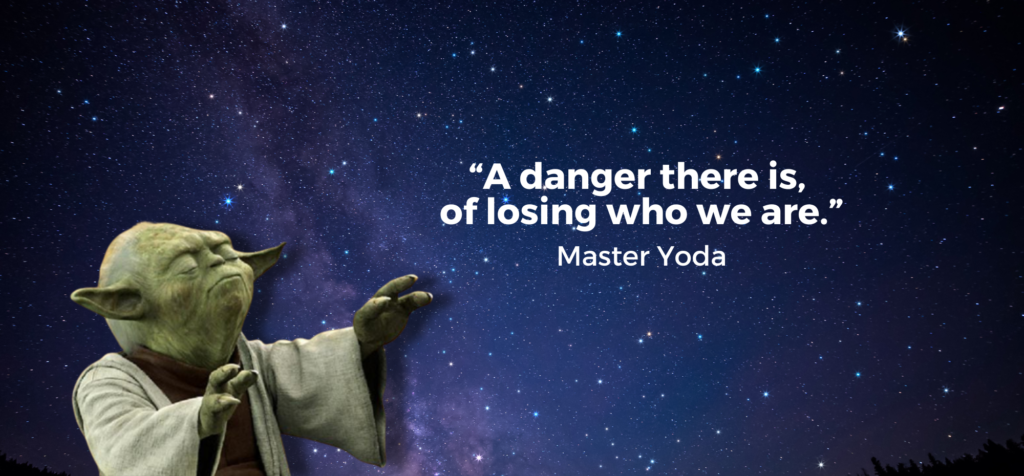
Once again, let me offer these words of wisdom from one of the great philosophers of our time, “A danger there is, of losing who we are.”
Tim Heller is an AMS Certified Broadcast Meteorologist and Weather Communications Coach. He helps local TV stations and broadcast meteorologists level up their on-air performance and off-air productivity.
Read more News & Insights from HellerWeather