


Exploring the Augmented World of Max Reality
I’m sure you’ve seen the viral videos from The Weather Channel showing the dangers of storm surge flooding, tornadoes, and other natural disasters. Although the weather looks (and sounds!) real in these videos, the entire thing was computer-generated. Except for the on-camera meteorologists, of course!
Representatives from the Weather Channel recently explained at a weather conference that those “immersive mixed reality” scenes typically take about six months to design and create.
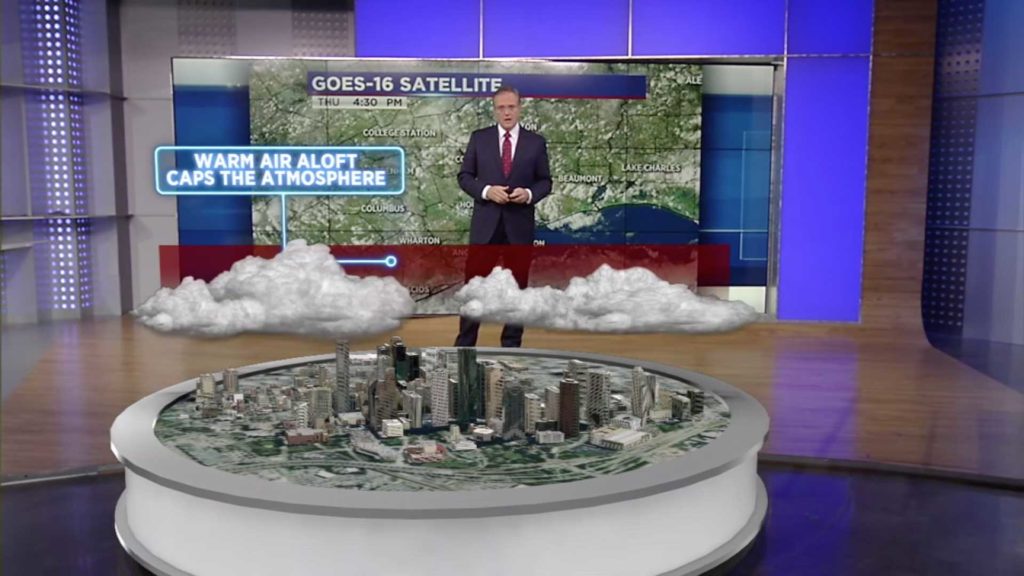
While it might not be as extravagant, augmented reality content created with The Weather Company’s Max Reality software can be just as engaging and informative. Maps showing a 3D skyline with towering clouds can illustrate the development of afternoon thunderstorms. Life-size cars can roll across the set and then float as rain appears to fall and water rises inside the studio. Simple data like temperatures can literally pop off the map as if they will land in the viewer’s lap. All it takes is a little creativity. Well, that and lots of time.
How the software works
Every scene in the Max weather graphics application includes a Studio or Earth background and Windshield layers. When Max Reality is installed, every scene has an extra Reality layer with separate camera and lighting controls.
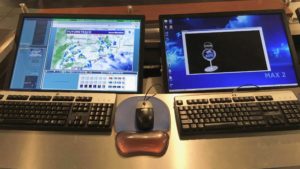
While a scene can be created using just one Max computer, two computers are required during playback. One computer renders the background layers of the scene, which appear behind the on-air talent, either in chromakey or a video wall. A second computer renders the Reality layer, which is keyed in front of the talent.
This setup allows broadcast meteorologists to create immersive scenes where the content in the background and foreground complement each other. For example, while a weather map in the background might show the future radar and satellite for the entire region, a 3D element in the Reality layer could break down the weather conditions for a specific location.
This performance requires acting and choreography
Max Reality requires performance space for these augmented reality objects to appear beside or in front of the broadcast meteorologist. Larger 3D elements, like the skyline map shown above, require a wider camera shot and lots of floor space. However, smaller scenes featuring elements that appear on top of the weather desk or in the weather center can be just as effective.
READ MORE > 5 COMMON MAX REALITY MISTAKES
A little performance is also required of broadcast meteorologists. If a real object suddenly popped out of the studio floor or dropped from the ceiling, the meteorologist would naturally look in that direction. The same thing must happen when the augmented reality content appears on-screen. Meteorologists should turn and look in the direction where the 3D objects would be within the studio space, if they were in fact real.
Everything takes time
Max Reality scenes generally take more time to play back on-air than normal scenes. They also take more time to create. The average augmented reality scene might be only 5-10 seconds long, but it could easily take 2-3 hours to build. More complicated scenes can take several hours over several days to build and refine.
The key is planning and practicing. Sketching out ideas beforehand will save time during the construction of the scene. It’s also recommended that broadcast meteorologists do several camera tests while building Max Reality content to ensure proper sizing and placement within the studio space. Finally, when everything is nearly complete, practice how the scene will be produced on-air. Tweak the content and the delivery until it looks, well…real!
HellerWeather has a marketing and training partnership with The Weather Company. If your weather team needs assistance designing and creating augmented reality weather content, Talk to Tim.
Tim Heller is an AMS Certified Broadcast Meteorologist, Talent Coach, and Weather Content Consultant. He helps local TV stations and broadcast meteorologists communicate more effectively and work more efficiently.